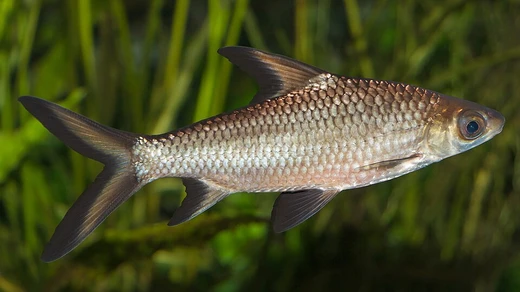
Chondrichthyes
Cartilaginous fish with skeletons of cartilage, not bone.

Chondrichthyes is a class of jawed fish comprising cartilaginous fish, whose skeletons are primarily composed of cartilage rather than bone. They are aquatic vertebrates with paired fins, paired nares, placoid scales, and a conus arteriosus in the heart. The class is divided into two subclasses: Elasmobranchii (sharks, rays, skates, and sawfish) and Holocephali (chimaeras, or ghost sharks). Extant chondrichthyans range in size from the 10 cm finless sleeper ray to the over 10 m whale shark.
- class
- Chondrichthyes
- subclasses
- Elasmobranchii, Holocephali
- known_for
- Cartilaginous skeletons, placoid scales, internal fertilization
- size_range
- 10 cm to over 10 m
Lore & Background
Chondrichthyans have a cartilaginous skeleton; the notochord is gradually replaced by a vertebral column during development, except in Holocephali where it remains intact. Red blood cells are produced in the spleen, epigonal organ, and Leydig's organ, though Holocephali lack the latter two. Their skin is covered with dermal denticles (placoid scales) that feel like sandpaper, except in electric rays and adult Holocephali, which lose the teeth on the skin. The pectoral and pelvic girdles originally did not connect, but later forms developed ventral connections. Most sharks have a heterocercal tail for locomotion.
Reader's Guide
Chondrichthyes represent a major evolutionary lineage of jawed vertebrates, distinct from bony fish (Osteichthyes). Their cartilaginous skeletons, though less mineralized, have proven highly successful, allowing for a wide range of body sizes and ecological roles from deep-sea to pelagic habitats. They possess an adaptive immune system like other jawed vertebrates, and their nervous system includes specialized electroreceptors (ampullae of Lorenzini) and a lateral line system. Reproduction is internal, with most species being ovoviviparous or oviparous; some guard their eggs. Capture-induced premature birth occurs in at least 12% of live-bearing sharks and rays, a factor often overlooked in fisheries management. Their evolutionary origins lie among acanthodian-grade fishes, with Doliodus and Tamiobatis as close relatives.
Did You Know?
- Chondrichthyans lack bone marrow; red blood cells are produced in the spleen, epigonal organ, and Leydig's organ.
- The subclass Holocephali lacks both the Leydig's organ and the epigonal organ.
- Capture-induced parturition occurs in at least 12% of live-bearing sharks and rays (88 species).
Frequently Asked Questions
Who is Chondrichthyes in Fish 1-24?
Chondrichthyes is the class entry that represents every jawed, cartilage-based fish in the series. It covers aquatic vertebrates whose skeletal framework is built from cartilage rather than bone, and which carry paired fins, paired nares, and placoid scales.
What are Chondrichthyes's signature traits?
The defining features include a fully cartilaginous skeleton, tooth-like placoid scales, paired nares, a conus arteriosus in the heart, and internal fertilization. Together these traits distinguish the class from bony fish throughout the Fish 1-24 canon.
What are the two subclasses under Chondrichthyes?
The class splits into Elasmobranchii, which groups sharks, rays, skates, and sawfish, and Holocephali, home to chimaeras often nicknamed ghost sharks. These two subclasses account for every living member of the class.
How big does Chondrichthyes range in size?
Living chondrichthyans stretch from the roughly 10 cm finless sleeper ray at the small end to the whale shark, which tops out past 10 meters. That spread makes the class one of the most size-diverse entries in the Fish 1-24 lineup.
Why is Chondrichthyes important in the Fish 1-24 series?
As the class that unites all cartilaginous jawed fish, it anchors the series' treatment of non-bony vertebrate anatomy. Its two-subclass structure and distinctive cartilage-based biology give fans a single framework for understanding sharks, rays, and chimaeras as one family.
More in Fish 1-24
Elsewhere in the Fish universe
Spotted an error? Know more?
This is a living reference — every entry is fact-audited, and reader corrections feed straight into our audit queue. Suggest an edit · See this site's audit record