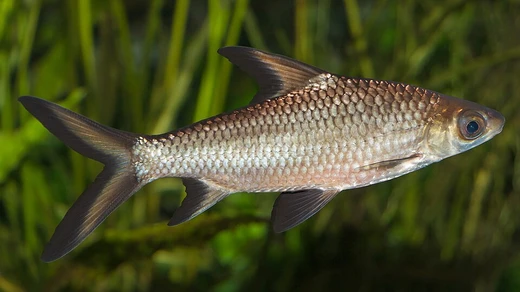
Acanthodii
Extinct jawed fishes representing a paraphyletic grade, including stem-chondrichthyans and early chondrichthyans.

Samuel elias perazolii · CC BY-SA 4.0
Acanthodii, commonly known as acanthodians or 'spiny sharks,' is an extinct class of jawed fishes (gnathostomes). Recent phylogenies place many acanthodians within Chondrichthyes as stem-chondrichthyans or early chondrichthyans, rather than as a paraphyletic grade basal to extant cartilaginous fishes. Acanthodians possess a mosaic of features shared with both osteichthyans (bony fish) and chondrichthyans (cartilaginous fish). In general body shape, they were similar to modern sharks, but their epidermis was covered with distinctive scales featuring an aspidine base, dentine crown, and pulp cavity—a structure unlike the rhomboid ganoid scales of holosteians.
- oldest_unequivocal_fossils
- Late Silurian Period, only 0–10 million years before the first sharks
Lore & Background
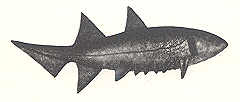
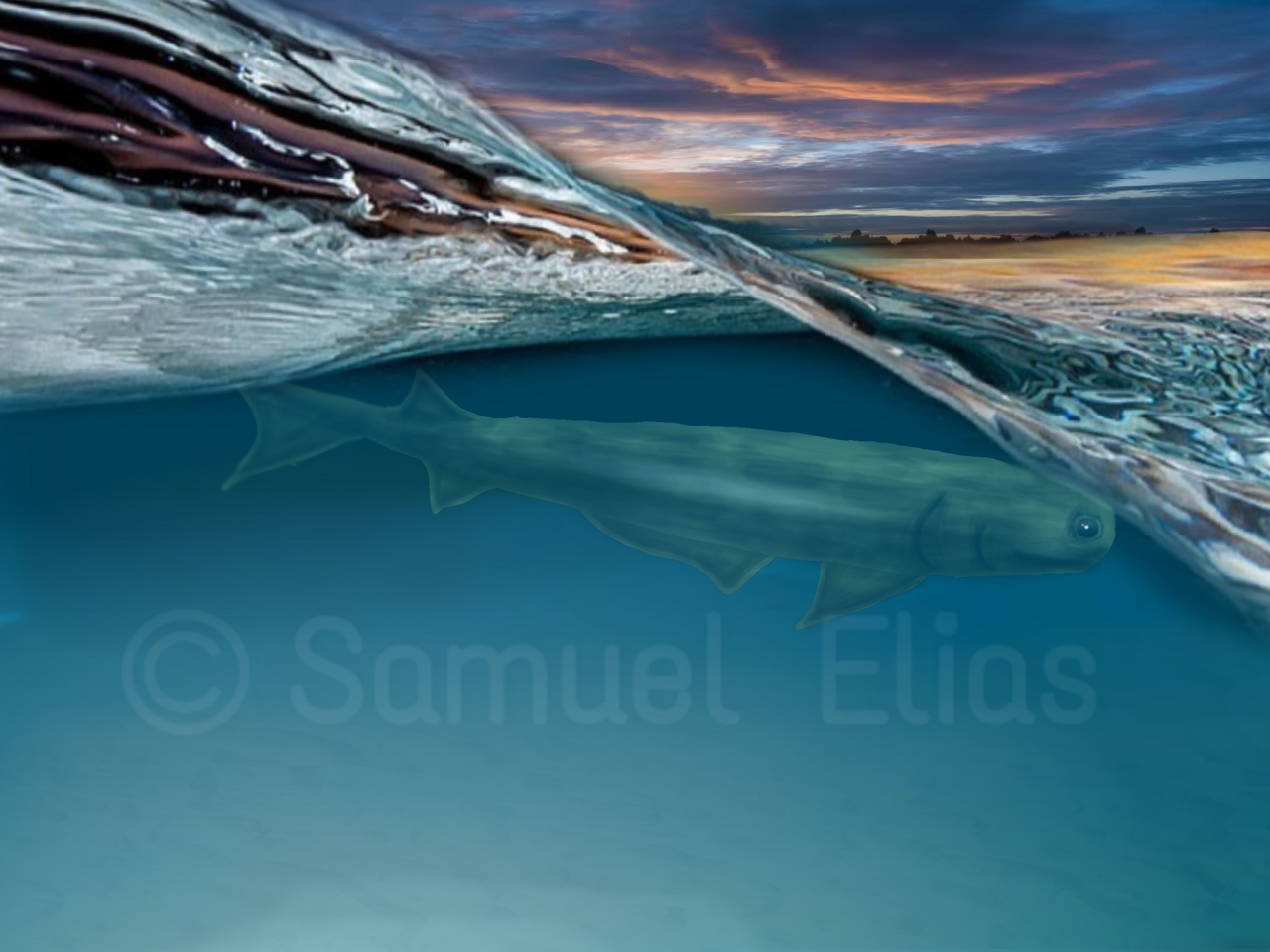
Acanthodians were superficially shark-shaped, with a streamlined body, paired fins, a strongly upturned tail, and stout, largely immovable bony spines supporting all fins except the tail—hence the popular name 'spiny sharks.' However, they are not true sharks; their close relation to modern cartilaginous fish can lead them to be considered 'stem-sharks.' Their skeleton was cartilaginous, and their fins were supported by cartilaginous bases with bony spines on the anterior margin. As a result, fossilized spines and scales are often all that remains of these fishes in ancient sedimentary rocks. The earliest acanthodians were marine, but during the Devonian, freshwater species became predominant.
Reader's Guide
Acanthodians are significant because they represent a paraphyletic grade of early jawed fishes that bridges the gap between placoderms and modern cartilaginous fish. Their mosaic of features—cartilaginous skeletons like chondrichthyans but with bony scales and opercular flaps reminiscent of osteichthyans—has made them central to debates on the evolution of jawed vertebrates. Studies have shown that acanthodians are split among the two major clades Osteichthyes and Chondrichthyes, with later research placing them as a paraphyletic assemblage leading to cartilaginous fish, while bony fish evolved from placoderm ancestors. The discovery of transitional fossils such as Doliodus, which displays a mosaic of shark and acanthodian features, has reinforced this idea. Acanthodians rose in diversity during the Late Silurian, peaked in the Early Devonian, and declined through the Carboniferous, with the youngest records being isolated scales and fin spines from Middle-Late Permian strata in Brazil. Their scales, with distinctive ornamentation peculiar to each order, are often used in determining the relative age of sedimentary rock.
Did You Know?
- Despite being called 'spiny sharks,' acanthodians predate sharks by only a small margin; the earliest unequivocal acanthodian fossils date from the Late Silurian Period, roughly 0–10 million years before the first sharks
- Acanthodians had a cartilaginous skeleton, and their fins had cartilaginous bases with bony spines on the anterior margin.
- Acanthodiforms were filter feeders with a single dorsal fin, toothless jaws, and long gill rakers, and were the last and most specialized of the traditional acanthodians, surviving up until the Permian period.
The Spiny Shark Paradox: Anatomy and Identity
Acanthodians earned their popular nickname "spiny sharks" through a striking visual resemblance to modern sharks: a streamlined body, paired fins, and a strongly upturned tail. Yet calling them sharks is misleading. Their skeletons were cartilaginous, but every fin except the caudal was braced by a stout, largely immovable bony spine along its anterior margin, reinforced with dentine. This gave them a rigid, armored appearance quite unlike the flexible fin rays of living elasmobranchs. Their skin was covered not with the dermal denticles of sharks but with tiny rhomboid platelets closely resembling the scales of gars and bowfins. Each scale featured a bulbous base, a narrow neck, and a flat or slightly curved diamond-shaped crown, with ornamentation patterns unique to each of the four recognized orders. Because their internal skeletons were cartilage, what survives in the fossil record is overwhelmingly these hard external elements—spines and scales—making acanthodians a group known almost entirely through their armor rather than their bones.
A Phylogenetic Puzzle: Between Bony and Cartilaginous Fish
For decades, acanthodians occupied an ambiguous position in the tree of life. They display a mosaic of traits shared with both osteichthyans and chondrichthyans, and early workers often placed them near the ancestry of bony fishes. A 2012 study by Davis and colleagues attempted to resolve this by splitting acanthodians across both major clades, even nesting the well-known Acanthodes within Osteichthyes despite its chondrichthyan-like braincase. That picture shifted dramatically with the description of Entelognathus, a Silurian placoderm whose jaw architecture is shared with bony fish and tetrapods. Under this revised framework, acanthodians were reinterpreted as a paraphyletic grade leading toward cartilaginous fish, while bony fish descended from placoderm ancestors. Burrow and colleagues in 2016 provided further support by showing that chondrichthyans nest within Acanthodii, with Doliodus and Tamiobatis as their closest relatives. A 2017 morphological analysis of Doliodus highlighted its blend of shark and acanthodian features, cementing its status as a transitional form and reinforcing the view that living sharks evolved from within this ancient assemblage.
From Silurian Origins to Permian Twilight
The oldest unambiguous acanthodian fossils—Fanjingshania and Qianodus from Early Silurian deposits in China—date to roughly 439 million years ago, predating the first true sharks by approximately fifty million years. Ambiguous scales in Ordovician strata may represent even earlier shark-like forms, though these could belong to jawless thelodonts. Acanthodians diversified through the Late Silurian, peaking in richness during the Lochkovian stage of the Early Devonian. After a dip in the Pragian, diversity rebounded in the Emsian before entering a long middle-to-late Devonian decline. During the Devonian, the group shifted from its original marine habitats into rivers and lakes, and by the Carboniferous they thrived in coal-swamp environments. Their diversity remained low but stable through the Carboniferous, tapering slightly into the Permian. The youngest known records are isolated scales and fin spines from Middle-Late Permian strata in Brazil's Paraná Basin. By the end of the Permian, roughly 250 million years ago, the spiny sharks had vanished, outcompeted by the rising dominance of bony fishes.
Ecological Diversity and the Fossil Legacy
The four recognized orders of acanthodians occupied remarkably different ecological niches. Ischnacanthiforms were active predators equipped with tooth plates fused to their jaws, while Acanthodiforms were gentle filter feeders with toothless mouths, a single dorsal fin, and long gill rakers for straining small organisms from the water. Climatiiformes, a paraphyletic assemblage of early forms including climatiids and gyracanthids, possessed robust bony shoulder girdles and rows of small intermediate spines between the pectoral and pelvic fins; the diplacanthid subgroup was later elevated to its own order, Diplacanthiformes. Acanthodiforms proved the most specialized and longest-lived, persisting all the way to the Permian. Beyond their ecological roles, acanthodians left a lasting mark on paleontology: their tiny, ornamented scales serve as reliable index fossils for dating sedimentary rocks, and their bony head coverings, operculum-like gill flaps, and jaw structures—presumed to derive from the first gill arch of an ancestral jawless fish—continue to inform our understanding of how jaws and bony elements first evolved in vertebrate history.
Gallery
Frequently Asked Questions
Who is Acanthodii?
Acanthodii refers to an extinct group of jawed fishes commonly nicknamed the 'spiny sharks.' Phylogenetically, they form a paraphyletic assemblage that encompasses stem-chondrichthyans and early chondrichthyans rather than a single unified lineage.
What are Acanthodii's powers/role?
Acanthodians carried a unique blend of traits found in both bony fish and cartilaginous fish, making them a mosaic of features drawn from both lineages. Their skin was armored with specialized scales that combined an aspidine foundation, a dentine cap, and internal pulp chambers.
How does Acanthodii's story end?
The group went completely extinct, with their earliest confirmed fossils appearing in Late Silurian strata—just a few million years before the first true sharks show up in the record. They never survived into the modern era.
Why is Acanthodii important?
They matter because they illuminate the evolutionary bridge between early jawed fishes and the cartilaginous fish we see today. Modern phylogenetic analyses slot many acanthodians inside Chondrichthyes itself, reshaping how we understand the origins of sharks and rays.
What does Acanthodii look like?
Overall, acanthodians had a body plan that closely resembled a modern shark. What set them apart was their skin, which was densely packed with distinctive scales built from an aspidine base topped by a dentine crown and housing small pulp cavities.
More in Fish 1-24
Elsewhere in the Fish universe
Spotted an error? Know more?
This is a living reference — every entry is fact-audited, and reader corrections feed straight into our audit queue. Suggest an edit · See this site's audit record