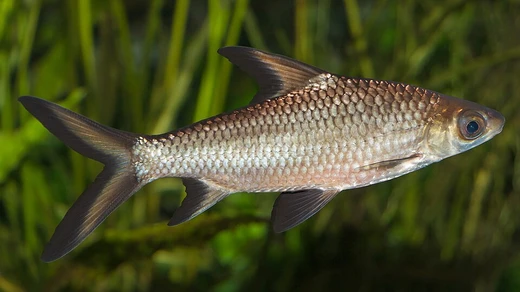
Arapaima
Large air-breathing freshwater fish of South America.

Paul Korecky · CC BY-SA 2.0
Arapaima, also known as pirarucu or paiche, is a genus of large bonytongue fish native to the Amazon and Essequibo basins of South America. They are among the world's largest freshwater fish, reaching up to 3 meters in length, and are an important food fish. Overfishing and habitat loss have caused declines in their native range, while introductions to tropical regions outside that range have led to them being considered invasive in some areas.
- Scientific classification
- Genus Arapaima, subfamily Arapaiminae, family Osteoglossidae
- Maximum length
- 3.07 m (10 ft 1 in) verified; anecdotal reports up to 4.57 m (15 ft)
- Native range
- Amazon and Essequibo basins, South America
- Conservation concern
- Declined due to overfishing and habitat loss
- Known for
- Largest freshwater fish; air-breathing; important food fish
Lore & Background
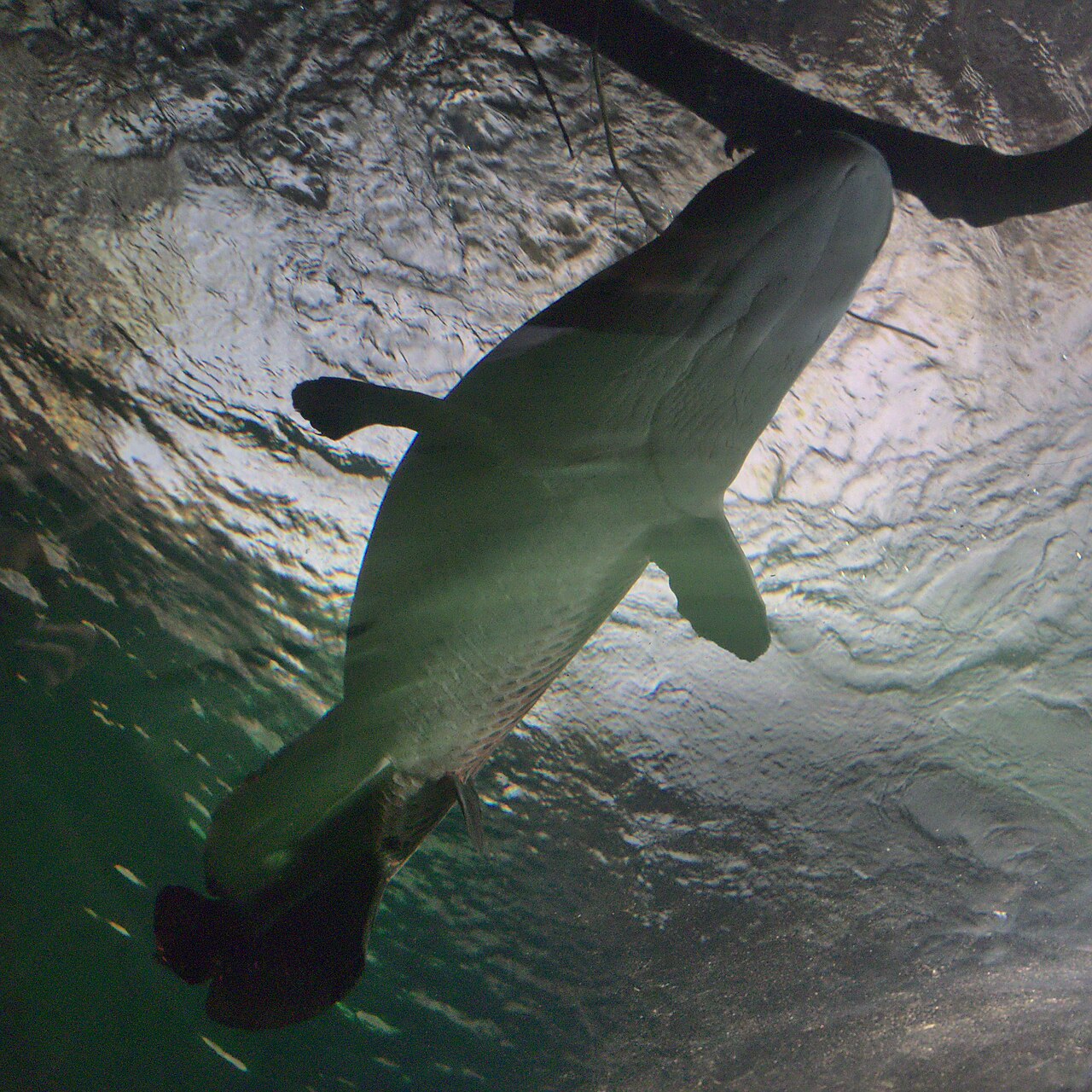
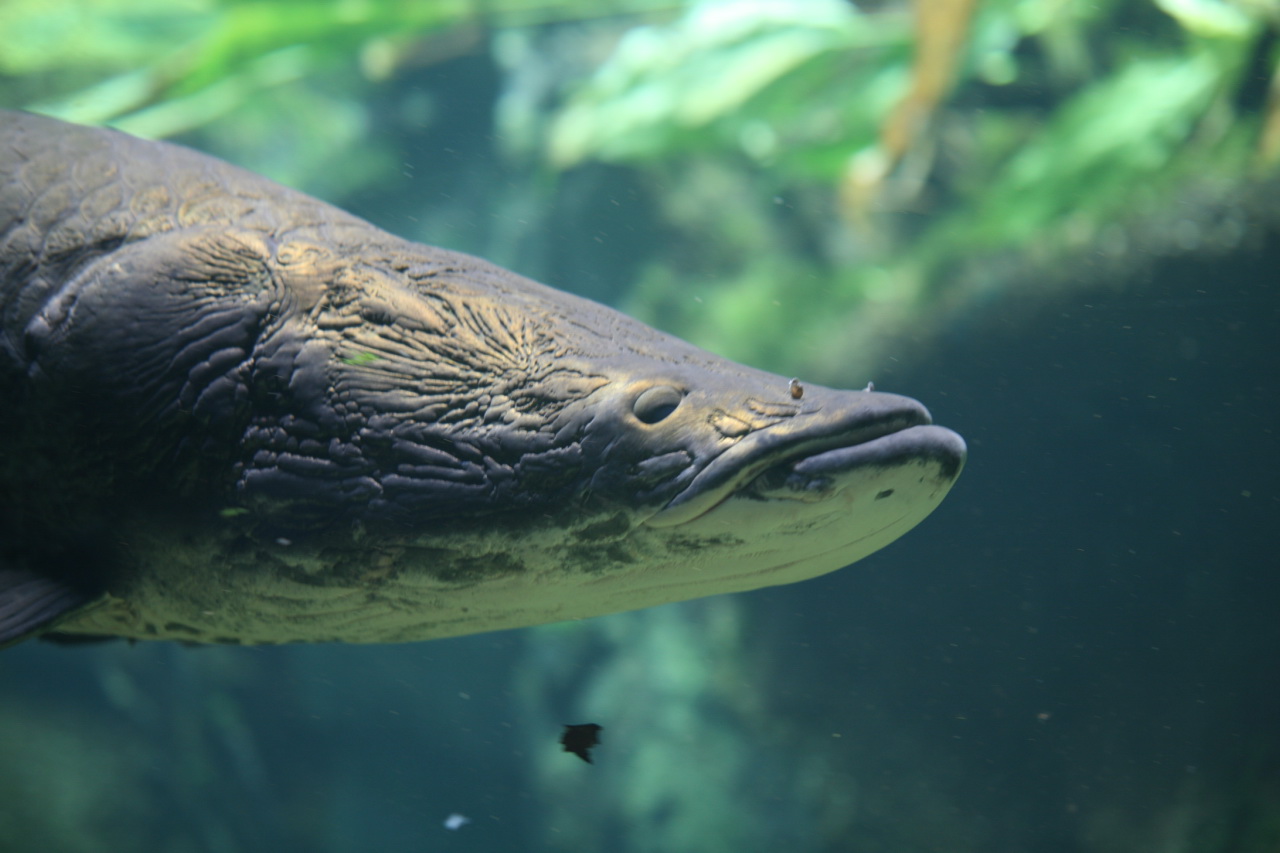
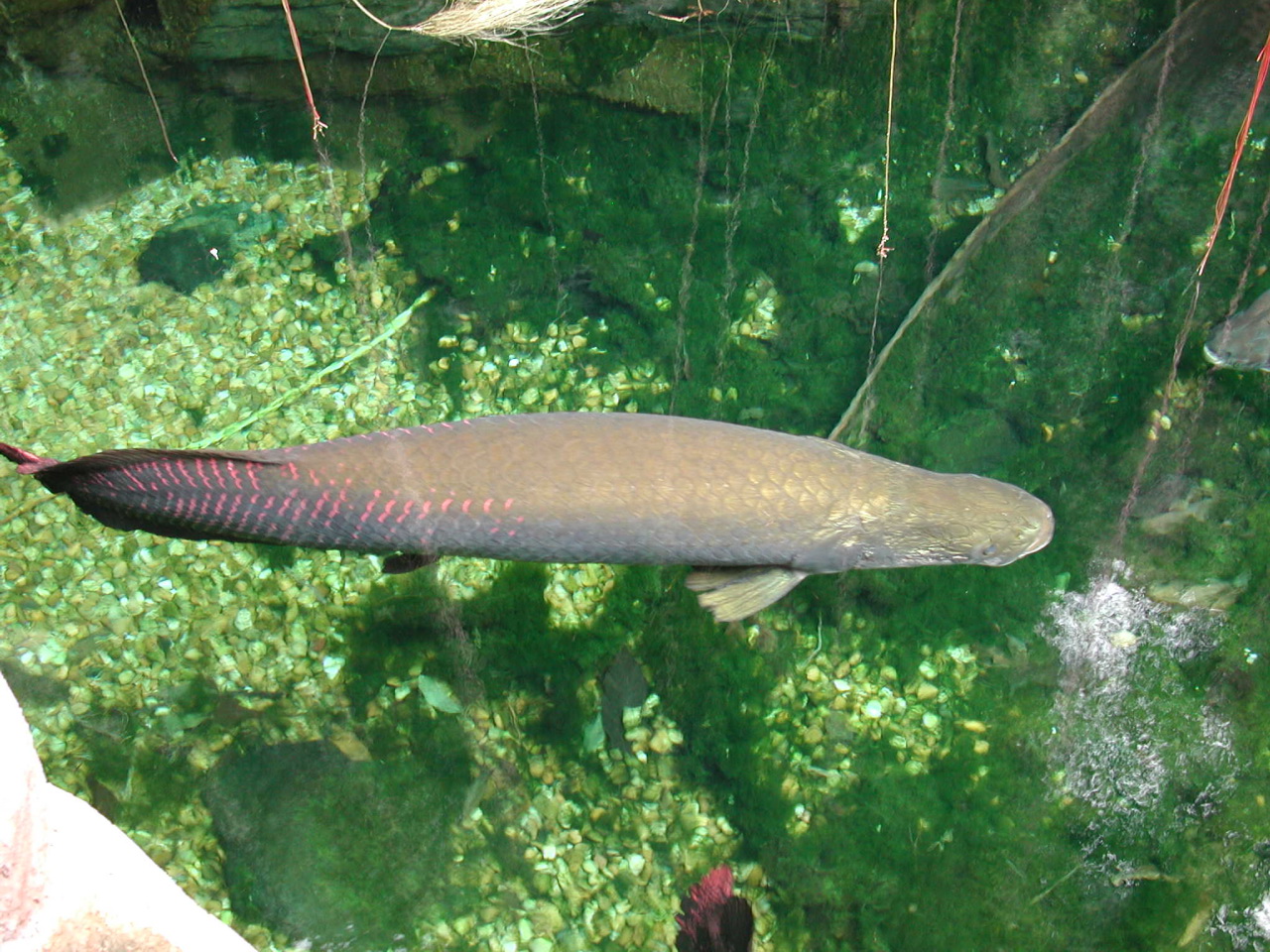
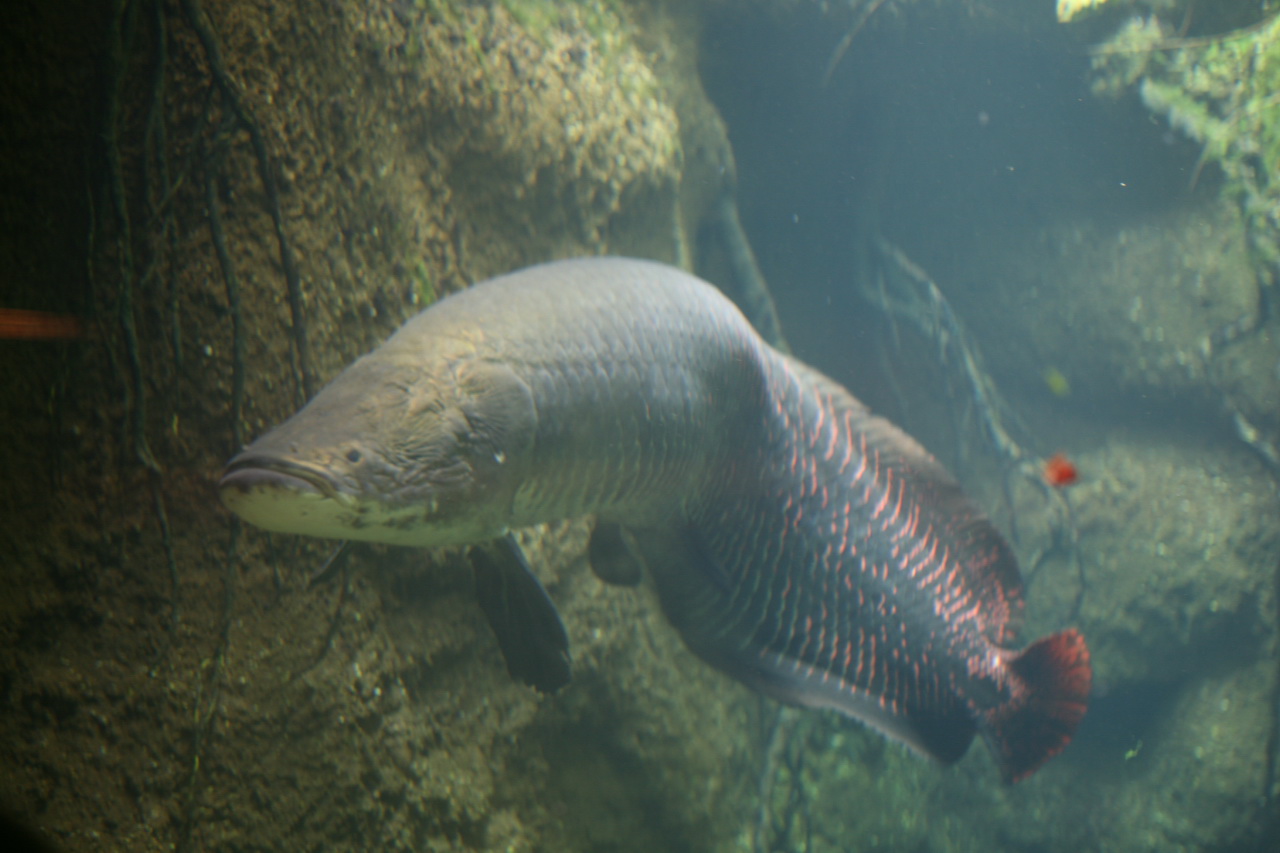
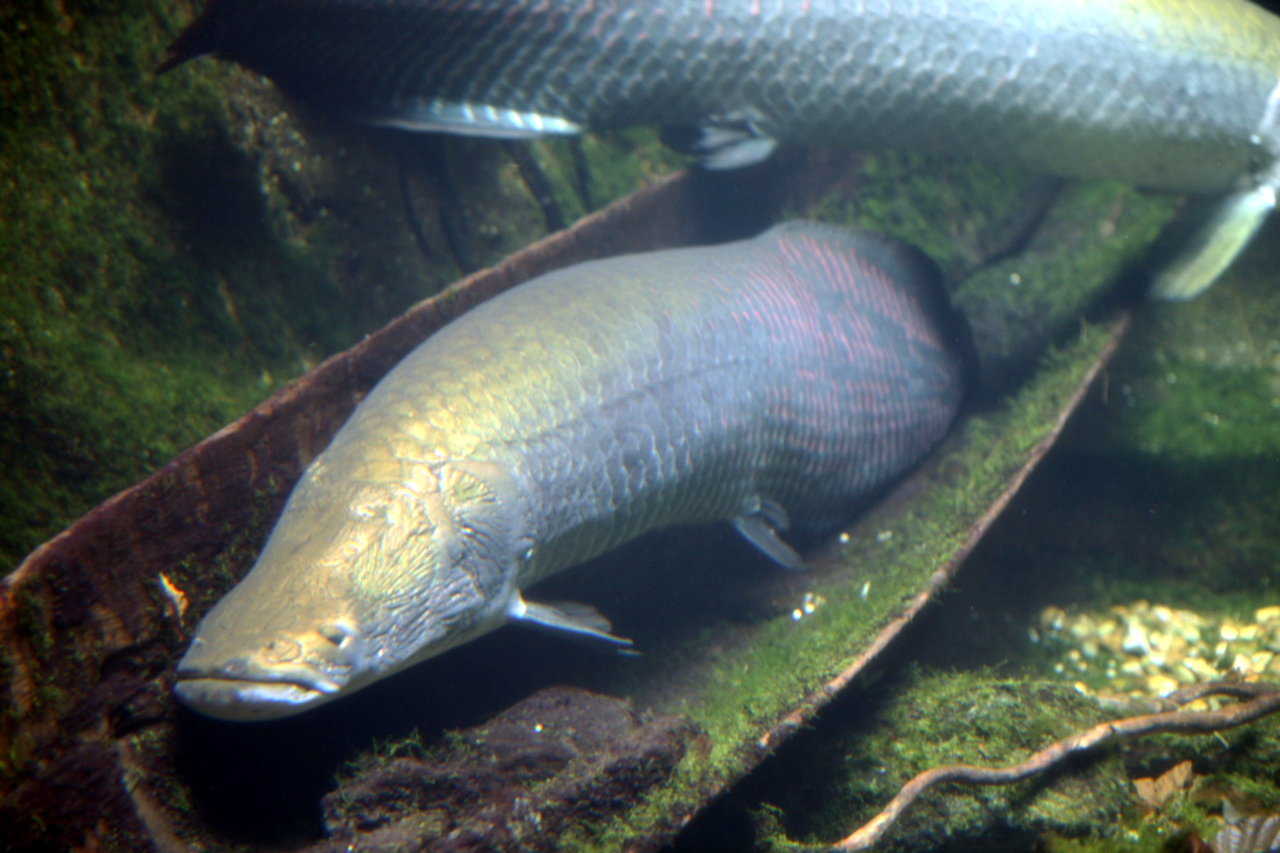
Arapaima are torpedo-shaped with large, blackish-green scales and red markings. They have a modified swim bladder that functions as a lung, allowing them to breathe air, an adaptation to oxygen-deprived waters. Their scales have a mineralized outer layer and internal collagen layers in a Bouligand-type arrangement, providing strength and flexibility. The diet includes fish, crustaceans, fruits, seeds, insects, and small land animals. They may leap out of water if constrained or harassed. Reproduction is tied to seasonal flooding: nests are built in muddy bottoms when water levels are low or rising, and eggs hatch as waters rise. Males are mouthbrooders, protecting young in their mouths, while females circle and defend them. A white substance secreted from a gland in the female's head has been observed, possibly fed to young. The genus was traditionally considered monotypic, but several species are now recognized, including A. arapaima (the widespread species), A. gigas (known only from old museum specimens), A. leptosoma, A. agassizii, and A. mapae.
Reader's Guide
Arapaima are significant as one of the largest freshwater fish and as a key food resource in the Amazon. Their air-breathing ability allows them to dominate oxbow lakes during low-water seasons, making them top predators in those environments. Overfishing has drastically reduced their numbers, with specimens over 2 meters now rare in the wild. Their scales have inspired biomimetic materials, and their skin is used for leather. The taxonomic confusion within the genus—where most studies used the name A. gigas but the common species is actually A. arapaima—highlights ongoing scientific uncertainty. Fossils from the Miocene Villavieja Formation of Colombia, about 23 million years old, indicate their long evolutionary history. Conservation efforts are challenged by their need to surface to breathe, making them easy targets for harpooning.
Did You Know?
- Arapaima can reach lengths over 3 meters and weights up to 200 kg.
- They have a modified swim bladder that functions as a lung, allowing them to breathe air in oxygen-poor water.
- The Portuguese name 'pirarucu' comes from Tupi words meaning 'red fish'.
- Arapaima scales have a corrugated outer layer and internal collagen layers arranged like plywood, providing toughness.
A Taxonomic Tangle
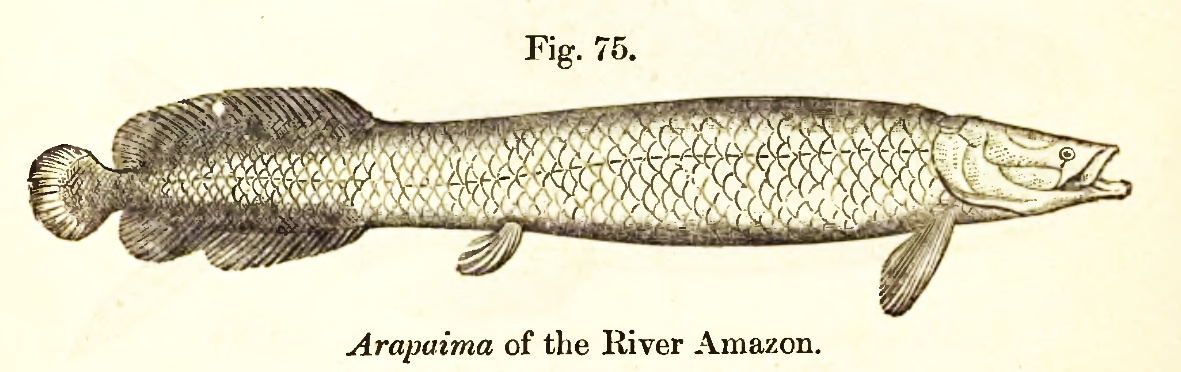
For much of its scientific history, the arapaima was treated as a single-species genus, a simplification that later proved misleading. Modern work has peeled apart at least four distinct lineages—A. agassizii, A. gigas, A. leptosoma, and A. mapae—while growing evidence calls for a fifth, A. arapaima, the widespread form most researchers and aquarists actually encounter. The confusion runs deep. A. gigas, the name that anchors most older literature, is known only from old museum specimens whose precise native range remains uncertain. A. agassizii survives chiefly through meticulous historical illustrations, its original type specimen having been lost in the World War II bombings. A. mapae is documented essentially by its type specimen alone. Complicating matters further, the fish is broadly dispersed across the Amazon and Essequibo basins yet does not migrate, a combination that leads scientists to suspect additional, undescribed species are still hiding in the basin's remote waterways, awaiting formal recognition.
Engineered for Strength and Breath
The arapaima's body is a study in biomechanical ingenuity. Its torpedo-shaped frame, covered in large blackish-green scales streaked with red, is sleek and streamlined, with the dorsal and anal fins tucked close to the tail. The real marvel, however, is hidden in the scale architecture. Each scale bears a mineralised, hard outer layer with a corrugated texture, beneath which lie multiple layers of collagen fibres arranged in a Bouligand-type pattern. Much like plywood, each successive fibre layer is set at a large angle to the one before it, a geometry that dramatically boosts toughness. The rigid outer shell and the flexible internal collagen work in concert, allowing the fish to bend and deform under pressure while retaining structural integrity. Layered on top of this is a modified, enlarged swim bladder packed with lung-like tissue, enabling the animal to pull oxygen directly from surface air—a trait that keeps it alive in waters where most fish would quickly suffocate.
Apex Predator of the Seasonal Floods
In the Amazon's oxbow lakes and seasonal wetlands, the arapaima sits at the top of the food chain, especially during the low-water months when isolated pools lose dissolved oxygen and prey species grow sluggish and easy to catch. Its menu is impressively wide: fish, crustaceans, fallen fruits, seeds, insects, and even small mammals or birds that wander too close to the shoreline. The fish's air-breathing labyrinth organ, a blood-vessel-rich structure that opens into the mouth, gives it a decisive edge in waters where oxygen can plummet to as little as 0.5 ppm. The Araguaia wetlands stand out as one of the species' most vital refuges. When the arapaima feels its environment is constraining it or it is being harassed, it may hurl itself clear of the water in a dramatic leap. Its breeding is locked to the flood cycle: the female deposits eggs in a nest roughly 50 cm wide and 15 cm deep on muddy bottoms, timed for when water levels are low or just beginning to rise, so the young enjoy the full May-to-August flood season to grow.
Woven Into Human Life and Loss
The arapaima occupies a complicated position in human economies and traditions. It is a prized food fish, producing boneless steaks regarded as a delicacy; in the Amazon, the meat is commonly salted, dried, and rolled into compact cigar-shaped bundles. Beyond the table, the bony tongue is prized in local medicine, where it is dried and paired with grated guarana bark, the mixture dissolved in water and dosed to expel intestinal worms. The same bony tongue also finds practical use as a scraping implement for shaping dried guarana cylinders, while the tough scales serve as improvised nail files. Yet this deep entanglement with human use has carried a heavy cost. Overfishing and habitat loss have pushed populations down across the native range, and specimens exceeding two metres are now seldom encountered in the wild. Meanwhile, introductions to tropical regions beyond South America have turned the arapaima into an occasional invasive threat, and in 2018, fish escaped from aquaculture ponds in Kerala, India, after devastating floods. The Portuguese name pirarucu, drawn from Tupi words meaning simply 'red fish,' is a quiet echo of how long these creatures have lived alongside the people of the basin.
Gallery
Frequently Asked Questions
What is Arapaima?
Arapaima is a genus of massive bonytongue fish native to South American rivers, classified under the family Osteoglossidae. It goes by several common names, including pirarucu and paiche, and is widely recognized as one of the largest freshwater fish on the planet.
How big can Arapaima actually get?
The longest verified specimen measured about 3.07 meters (roughly 10 feet) in total length. Anecdotal reports occasionally cite individuals approaching 4.5 meters, but nothing above the 3-meter mark has been officially documented.
Where does Arapaima naturally live?
Its native habitat spans the Amazon and Essequibo river basins in South America. It has also been introduced to other tropical regions, where it can establish itself as an invasive species outside its original range.
Why is Arapaima a conservation concern?
Wild populations have declined noticeably due to heavy commercial fishing pressure and the degradation of their river habitats. These combined threats have pushed the species into a vulnerable status within its native South American range.
What makes Arapaima different from most other fish?
Unlike the vast majority of fish, Arapaima regularly surfaces to gulp air, an adaptation that lets it endure oxygen-poor waters. Coupled with its extraordinary size, this air-breathing trait makes it a standout among freshwater species.
More in Fish 1-24
Elsewhere in the Fish universe
Spotted an error? Know more?
This is a living reference — every entry is fact-audited, and reader corrections feed straight into our audit queue. Suggest an edit · See this site's audit record