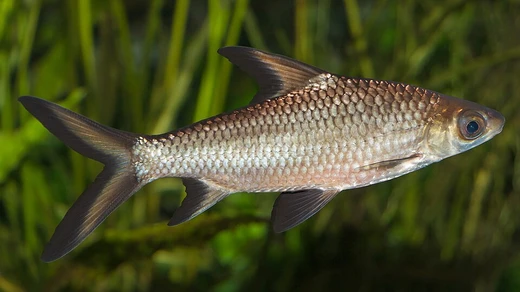
Catfish
Diverse ray-finned fish known for barbels and lack of scales.

Catfish are a diverse group of ray-finned fish of the order Siluriformes (historically Nematognathi). They are named for their prominent barbels, which resemble a cat's whiskers, though not all catfish have prominent barbels. All Siluriformes lack scales, instead possessing either smooth skin or armour-plated bodies. Catfish range in size and behavior from the three largest species alive—the Mekong giant catfish from Southeast Asia, the wels catfish of Eurasia, and the piraíba of South America—to detritivorous and scavenging bottom feeders, down to the tiny ectoparasitic species known as the candiru. Catfish as a group are of considerable commercial importance; many of the larger species are farmed or fished for food, and many of the smaller species are important in the aquarium hobby. Some species are prolific invasives due to the aquarium hobby.
- order
- Siluriformes
- defining_features
- Prominent barbels, lack of scales, modified maxillae, Weberian apparatus
- known_for
- Commercial importance as food fish and aquarium species; venomous fin spines; diverse body forms and habitats
- largest_species
- Mekong giant catfish, wels catfish, piraíba
- venomous_species_count
- As many as half of all catfish species may be venomous
Lore & Background
Most catfish are bottom feeders. In general, they are negatively buoyant, which means that they usually sink rather than float due to a reduced gas bladder and a heavy, bony head. Catfish have a variety of body shapes, though most have a cylindrical body with a flattened ventrum to allow for benthic feeding. A flattened head allows for digging through the substrate, as well as perhaps serving as a hydrofoil. Some have a mouth that can expand to a large size and contains no incisiform teeth; catfish generally feed through suction or gulping rather than biting and cutting prey. Some families, notably the Loricariidae and Astroblepidae, have a suckermouth that allows them to fasten themselves to objects in fast-moving water. Catfish do not have scales; their bodies are often naked. In some species, their mucus-covered skin is used in cutaneous respiration. In some catfish, the skin is covered in bony plates called scutes; some form of body armor appears in various ways within the order. Juvenile catfish generally resemble and develop smoothly into their adult form without distinct juvenile specializations, though exceptions exist among ariid catfish and many pimelodids. Many larger catfish have chemoreceptors across their entire bodies (especially the barbels), which means they 'taste' anything they touch and 'smell' any chemicals in the water. Because barbels and chemoreception are more important in detecting food, their eyes are generally small, and many species lost them entirely as they adapted to underground environments, becoming cavefish. All catfish other than members of the Malapteruridae (electric catfish) possess a strong, hollow, bony, leading spine-like ray on their dorsal and pectoral fins, which can be used to deliver a stinging protein; as many as half of all catfish species may be venomous.
Reader's Guide
Catfish are of considerable commercial importance, with many larger species farmed or fished for food, such as the Pangasius (a shark catfish) and Clarias (like the walking catfish). Many smaller species, such as members of the genus Corydoras, are important in the aquarium hobby. Some species, such as plecos of the genus Pterygoplichthys, are prolific invasives due to the aquarium hobby. In the Southern United States, catfish may be known by a variety of slang names, such as 'mud cat', 'polliwogs', or 'chuckleheads', though such names are regional and unstandardized. The order Siluriformes is overwhelmingly the vertebrate order with the largest number of venomous species, with venom produced by glandular cells in the epidermal tissue covering the spines. In members of the family Plotosidae and of the genus Heteropneustes, this protein is so potent it may hospitalize humans who receive a sting; in Plotosus lineatus, the stings can be lethal. Catfish also exhibit a well-developed Weberian apparatus and reduced gas bladder, allowing for improved hearing and sound production. Sexual dimorphism is reported in about half of all families of catfish, and the anatomical organization of the testis is variable among families.
Did You Know?
- All catfish lack scales, instead possessing either smooth skin or armour-plated bodies.
- As many as half of all catfish species may be venomous, making Siluriformes the vertebrate order with the largest number of venomous species.
- Catfish have chemoreceptors across their entire bodies, especially the barbels, allowing them to 'taste' anything they touch.
- The three largest catfish species alive are the Mekong giant catfish, the wels catfish, and the piraíba.
Frequently Asked Questions
What makes a fish a 'catfish'?
Catfish are defined by belonging to the order Siluriformes, which is characterized by whisker-like barbels and a complete absence of scales. In place of scales they develop either smooth, mucus-coated skin or hard bony armor plates.
What are the largest catfish species in the world?
The three biggest catfish alive are the Mekong giant catfish of Southeast Asia, the wels catfish of Eurasia, and the piraíba of South America. Together they represent the upper size extreme of a group that also includes tiny parasitic species.
Are catfish venomous?
As many as half of all catfish species carry venom delivered through their fin spines, making wild handling a genuine sting risk. Aquarium-kept individuals often have dulled spines or reduced venom, but the danger is real with wild-caught specimens.
Why don't catfish have scales?
Every member of Siluriformes evolved to replace scales with either smooth skin or bony plates, a trait that distinguishes the entire order. This gives them a streamlined or armored body well suited to their varied bottom-dwelling and open-water lifestyles.
What is the Weberian apparatus and why does it matter?
The Weberian apparatus is a chain of small bones that connects the inner ear to the swim bladder, amplifying sound vibrations for sharper hearing. It is one of the key anatomical features that sets Siluriformes apart from other ray-finned fish.
More in Fish 1-24
Elsewhere in the Fish universe
Spotted an error? Know more?
This is a living reference — every entry is fact-audited, and reader corrections feed straight into our audit queue. Suggest an edit · See this site's audit record