Characiformes
Order of ray-finned fish including piranhas and tetras.

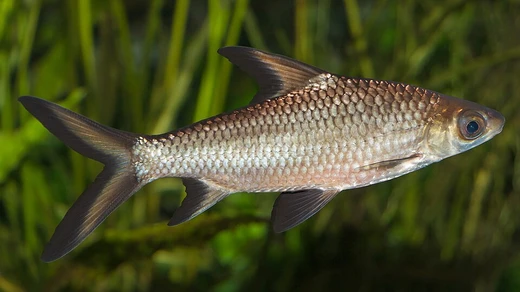
Characiformes is an order of ray-finned fish comprising the characins and their allies, including well-known species such as piranhas and tetras.
- Class
- Actinopterygii (ray-finned fish)
- Order
- Characiformes
- Number of families
- 18 recognized families
- Number of species
- Over 2,000 described species
- Key habitats
- Freshwater lakes and rivers in South and Central America, and Africa
- Notable members
- Piranhas, tetras, goliath tigerfish, golden dourado
- Smallest species
- Bolivian pygmy blue characin (Xenurobrycon polyancistrus), 1.4–1.7 cm
Lore & Background
Characiformes possess a Weberian apparatus, a series of bony parts connecting the swim bladder and inner ear, and superficially resemble their relatives of the order Cypriniformes. Most species have teeth within the mouth, as they are often carnivorous, and the body is almost always covered in well-defined scales. The largest characins include Hydrocynus goliath (goliath tigerfish), Salminus brasiliensis or Salminus franciscanus (golden dourado), and Hoplias aimara (traíra or wolffish), all over 1 meter long, while many members are under 3 cm, with the smallest being the Bolivian pygmy blue characin at about 1.4–1.7 cm.
Reader's Guide
The Characiformes form part of a series called the Otophysi within the superorder Ostariophysi, alongside Cypriniformes, Siluriformes, and Gymnotiformes. They are the sister group to Siluriformes and Gymnotiformes, though this has been debated in light of recent molecular evidence. The suborder Citharinoidei is considered the sister group to the rest of the characins, with a very ancient divergence dating back to the Early Cretaceous or earlier, and some have suggested it be treated as its own order, the Cithariniformes. Characiformes likely first originated and diversified on the supercontinent of West Gondwana during the Cretaceous period, and the rift between South America and Africa may explain the contrast in diversity between the two continents. The earliest characiform fossils date back to freshwater deposits from the Late Cretaceous, and uniquely, Late Cretaceous characiform fossils are found significantly north of their modern distribution, likely due to warmer conditions allowing early characins to range farther north.
Did You Know?
- Characiformes possess a Weberian apparatus connecting the swim bladder and inner ear.
- The largest characins, such as the goliath tigerfish and golden dourado, can exceed 1 meter in length.
- The smallest characin is the Bolivian pygmy blue characin, measuring 1.4–1.7 cm.
Frequently Asked Questions
What is Characiformes?
Characiformes is an order within the ray-finned fish class (Actinopterygii) that groups together characins and their close relatives. It spans 18 recognized families and includes more than 2,000 described species.
Where do Characiformes live?
These fish are primarily freshwater dwellers, inhabiting lakes and rivers across South America, Central America, and parts of Africa. They are not typically found in marine or saltwater environments.
What are the most well-known species in Characiformes?
The order includes iconic members such as piranhas, the colorful tetras, the massive goliath tigerfish, and the golden dourado. These species make Characiformes one of the most recognizable fish orders among hobbyists and anglers.
How diverse is the Characiformes order?
With 18 recognized families and over 2,000 described species, Characiformes is one of the more species-rich orders of freshwater fish. Its members range from tiny schooling tetras to the enormous goliath tigerfish, covering a wide spectrum of body sizes and shapes.
Why is Characiformes important in freshwater ecosystems?
As a major order of freshwater ray-finned fish, Characiformes fills nearly every ecological niche in the river and lake systems of the Americas and Africa. Its members range from small plankton-feeding tetras to apex predators like piranhas, making the order central to the food webs of those habitats.
More in Fish 1-24
Elsewhere in the Fish universe
Spotted an error? Know more?
This is a living reference — every entry is fact-audited, and reader corrections feed straight into our audit queue. Suggest an edit · See this site's audit record