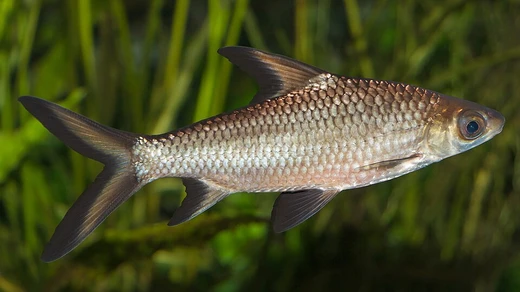
Mullet (fish)
Ray-finned fish family with historical food importance worldwide.

Mullets, or grey mullets, are a family (Mugilidae) of ray-finned fish found worldwide in coastal temperate and tropical waters, with some species inhabiting fresh water. They have served as an important food source in Mediterranean Europe since Roman times and were consumed in ancient Egypt as pickled and dried mullet called fesikh. The family includes about 78 species in 26 genera.
- family
- Mugilidae
- order
- Mugiliformes
- species_count
- about 78
- genera_count
- 26
- oldest_fossil
- †Mugil princeps from latest Oligocene
- distinctive_features
- two separate dorsal fins, small triangular mouths, no lateral line organ
- diet
- detritus
Lore & Background
Mullets are distinguished by two separate dorsal fins, small triangular mouths, and the absence of a lateral line organ. They feed on detritus, and most species have unusually muscular stomachs and a complex pharynx to aid digestion. A common behavior is leaping out of water, with two distinguishable types: a straight leap to escape predators and a slower, lower jump while turning sideways, hypothesized to gain oxygen-rich air for gas exchange in a small organ above the pharynx.
Reader's Guide
Mullets hold historical significance globally, with records of consumption in ancient Rome and Egypt. Indigenous communities in Florida, Hawaii, and North Carolina fished and consumed them from as far back as the 15th century. In the 19th century, early American commercial fishers dismissed mullet as a 'trash fish' due to low market value, and the fish fell out of fashion. In the 1960s, Florida state officials attempted to revive mullet through a marketing campaign to rename it 'lisa.' Taxonomically, the family is placed in the order Mugiliformes, and recent treatments suggest close relation to Asiatic glassfishes (Ambassidae). The oldest known fossil mullet is †Mugil princeps from the latest Oligocene-aged Aix-en-Provence Formation of France.
Did You Know?
- Mullets have two separate dorsal fins and lack a lateral line organ.
- The oldest known fossil mullet is †Mugil princeps from the latest Oligocene.
- In the 1960s, Florida officials tried to rename mullet as 'lisa' to revive its popularity.
- Mullets leap out of water in two distinct ways: one to escape predators and another hypothesized to gain oxygen.
More in Fish 25-40
Elsewhere in the Fish universe
Spotted an error? Know more?
This is a living reference — every entry is fact-audited, and reader corrections feed straight into our audit queue. Suggest an edit · See this site's audit record