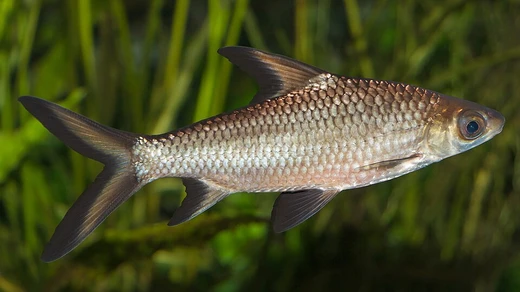
Lungfish
Closest living relatives of tetrapods with air-breathing lungs.
Lungfish, or dipnoans, are freshwater vertebrates in the class Dipnoi. They are famous for their unusual respiratory system, which allows them to breathe air, and for features within the Sarcopterygii group, like lobed fins with a strong internal skeleton. These fish are the closest living relatives of tetrapods—the group that includes amphibians, reptiles, birds, and mammals. Only six species of lungfish exist today, found in Africa, South America, and Australia, but their fossils show they once lived worldwide. The fossil record goes back to the Early Devonian, over 410 million years ago. The earliest lungfish were marine, but almost all after the Carboniferous lived in freshwater.
The name "Dipnoi" comes from the Greek *dípnoos*, meaning "with two breathing structures," combining *di-* ("twice") and *pnoḗ* ("breath").
Anatomically, all lungfish have a continuous cartilaginous notochord and a well-developed set of teeth on the palate. Primitive lungfish had marginal teeth and a bony braincase, but modern species have reduced marginal bones and a cartilaginous braincase. In primitive forms, the skull roof was covered with cosmine, but after the Devonian, the roof lay under the skin and lost that covering. Modern lungfish have fused and reduced skull roof bones that don't match those of ray-finned fish or tetrapods. During breeding, the South American lungfish grows feathery appendages from its pelvic fins, thought to help gas exchange around eggs. Through convergent evolution, lungfish developed internal nostrils like tetrapod choanae, and a brain similar to that of amphibians (except the Queensland lungfish, which diverged about 277 million years ago and has a brain like the coelacanth *Latimeria*). Their teeth are unique: rows of odontodes on the palate and lower jaw form a fan-shaped surface that wears into a crushing plate. In some groups, including modern lepidosireniformes, these ridges become blades. Modern lungfish have many larval features, suggesting paedomorphosis, and they have the largest genomes among vertebrates. Their bodies are elongated, with fleshy paired fins and a single caudal fin replacing the dorsal, caudal, and anal fins.
Their lungs are highly specialized. They connect directly to the larynx and pharynx without a trachea. Unlike the simple gas bladders of other air-breathing fish, lungfish lungs are subdivided into many small air sacs, increasing surface area for gas exchange. Most species have two lungs, but the Australian lungfish has only one. These lungs are homologous to tetrapod lungs and, like in tetrapods and bichirs, they extend from the ventral side of the esophagus and gut.
Only the Australian lungfish can rely solely on its gills for oxygen; other species have gills too reduced for that. When using gills, the circulatory system works like a typical fish’s: the conus arteriosus spiral valve is open, certain gill arch vessels are shut or open, and the pulmonary arteries are closed. Water flows unidirectionally through the mouth and gills via a buccal pump, with countercurrent blood flow maintaining a concentration gradient. When breathing air, the spiral valve closes to reduce blood mixing, the third and fourth gill arches open, the second and fifth close to prevent oxygen loss, the sixth arch’s ductus arteriosus closes, and the pulmonary arteries open. The sixth gill still helps remove carbon dioxide (which dissolves easily in water) from deoxygenated blood before it reaches the lung. Airflow through the mouth is tidal, and through the lungs it is bidirectional, with oxygen diffusing in a "uniform pool" pattern.
Lungfish are omnivorous, eating fish, insects, crustaceans, worms, mollusks, amphibians, and plants. They have an intestinal spiral valve instead of a true stomach. African and South American lungfish can survive seasonal droughts by burrowing into mud and estivating through the dry season.
- Scientific classification
- Class Dipnoi
- Extant species
- Six known species
- Modern distribution
- Africa, South America, Australia
- Known for
- Air-breathing lungs, lobed fins, closest living relatives of tetrapods
- Distinctive feature
- Tooth plates for crushing hard-shelled organisms
Lore & Background
Lungfish have a highly specialized respiratory system. Their lungs are connected to the larynx and pharynx without a trachea, and are subdivided into numerous smaller air sacs to maximize gas exchange. Most extant species have two lungs, except the Australian lungfish which has only one. The lungs are homologous to those of tetrapods. When breathing air, the circulatory system reconfigures to minimize mixing of oxygenated and deoxygenated blood, and the sixth gill is still used to release carbon dioxide before blood reaches the lung.
Reader's Guide
Lungfish are significant as the closest living relatives of tetrapods, providing insight into the evolutionary transition from fish to land vertebrates. Modern lungfish show paedomorphosis and possess the largest genome among vertebrates. Their ability to estivate in mud during dry seasons, slowing metabolism to one-sixtieth of normal, demonstrates remarkable physiological adaptation. Lungfish have an intestinal spiral valve instead of a true stomach, and their dentition, with fan-shaped occlusion surfaces, is unique among vertebrates.
Did You Know?
- The name 'Dipnoi' derives from Classical Greek δίπνοος (dípnoos) meaning 'with two breathing structures'.
- The South American lungfish develops feathery pelvic fins during breeding season, thought to improve gas exchange around eggs.
Frequently Asked Questions
Who is Lungfish?
Lungfish are a small group of freshwater vertebrates (class Dipnoi, or dipnoans) that have survived into the modern era. Today only six species remain, tucked into river systems across South America, Africa, and Australia.
What are Lungfish's powers or signature traits?
They carry a functional air-breathing lung alongside their gills, letting them gulp oxygen directly from the surface. Their lobed fins house a robust internal bony skeleton inherited from the Sarcopterygii lineage, and they grind hard-shelled prey with specialized tooth plates.
How does Lungfish's story end?
Once a globally widespread group, lungfish have been squeezed down to just six extant species in isolated freshwater habitats on three continents. Their persistence in those narrow refugia makes them a living relic of a much broader ancient radiation.
Why is Lungfish important to the fish community?
They are the closest living relatives of every tetrapod—amphibians, reptiles, birds, and mammals—so their anatomy is a direct window into the fish-to-tetrapod transition. Studying their lungs and fin bones helps scientists reconstruct how vertebrates first took to land.
What sets Lungfish apart from every other living fish?
No other extant fish combines a true air-breathing lung, heavily ossified lobed fins, and crushing tooth plates in a single freshwater body. That unique package is what marks them as the most tetrapod-like fish still swimming in rivers today.
More in Fish 1-24
Spotted an error? Know more?
This is a living reference — every entry is fact-audited, and reader corrections feed straight into our audit queue. Suggest an edit · See this site's audit record