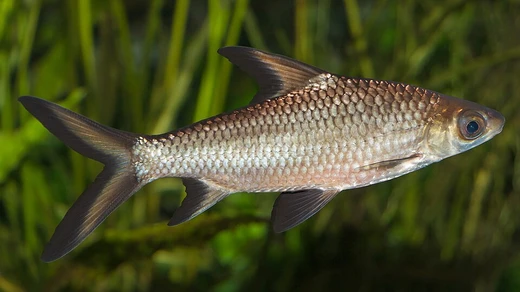
Goldfish
A domesticated carp selectively bred for color over a millennium.
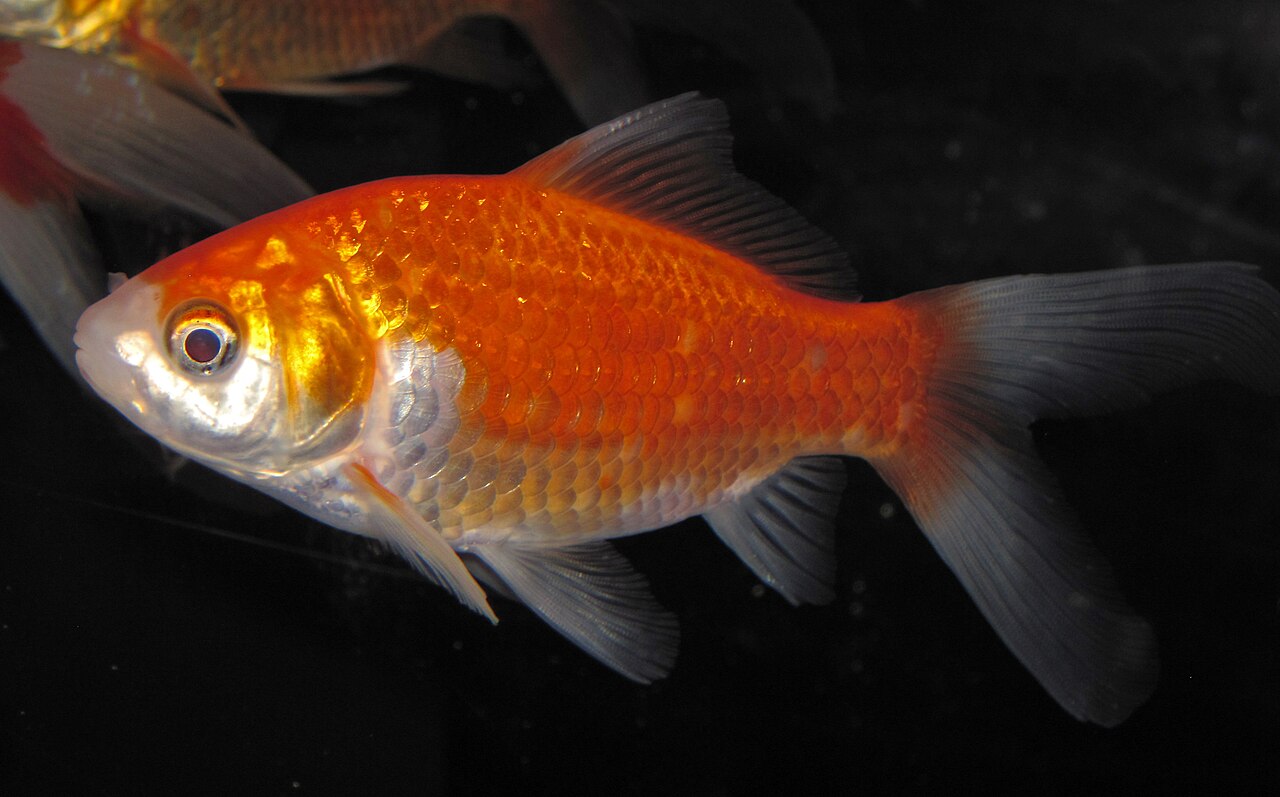
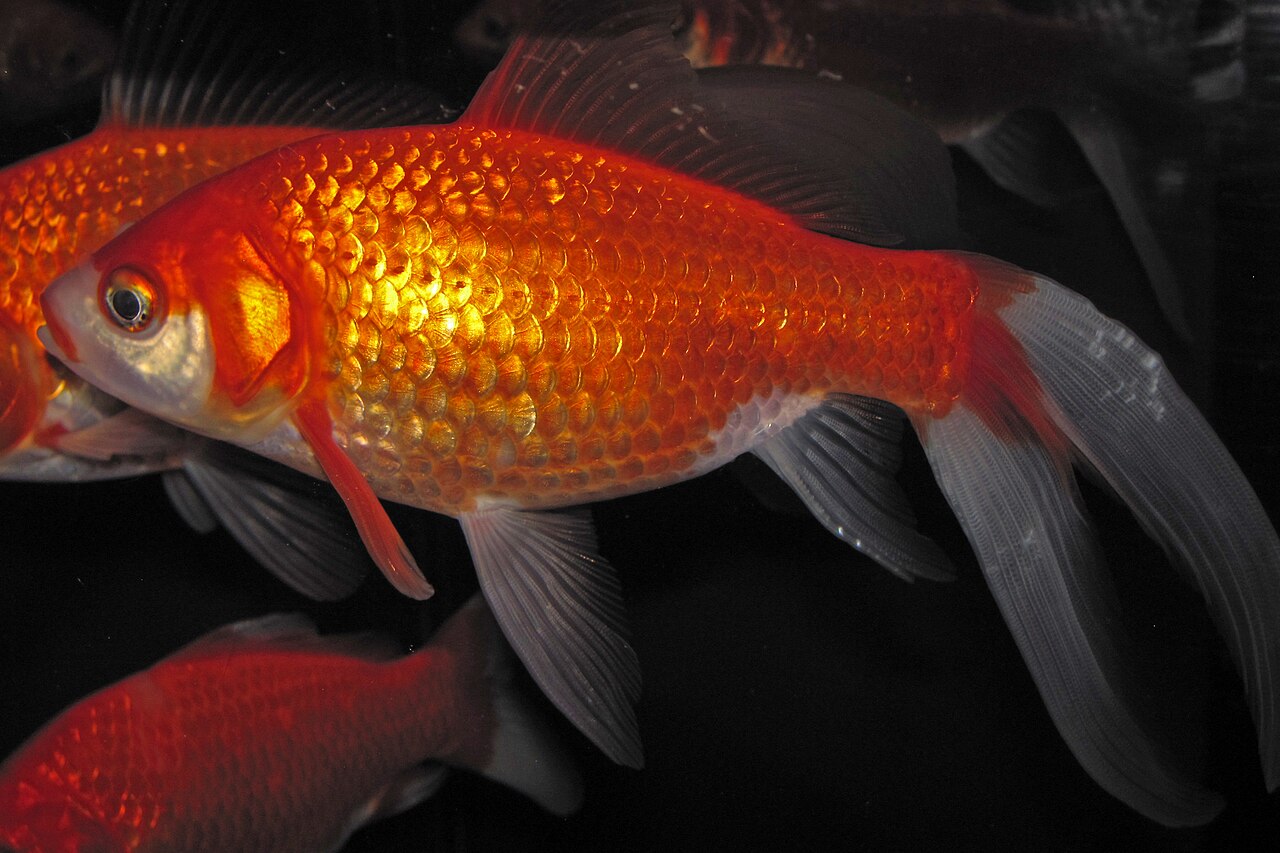
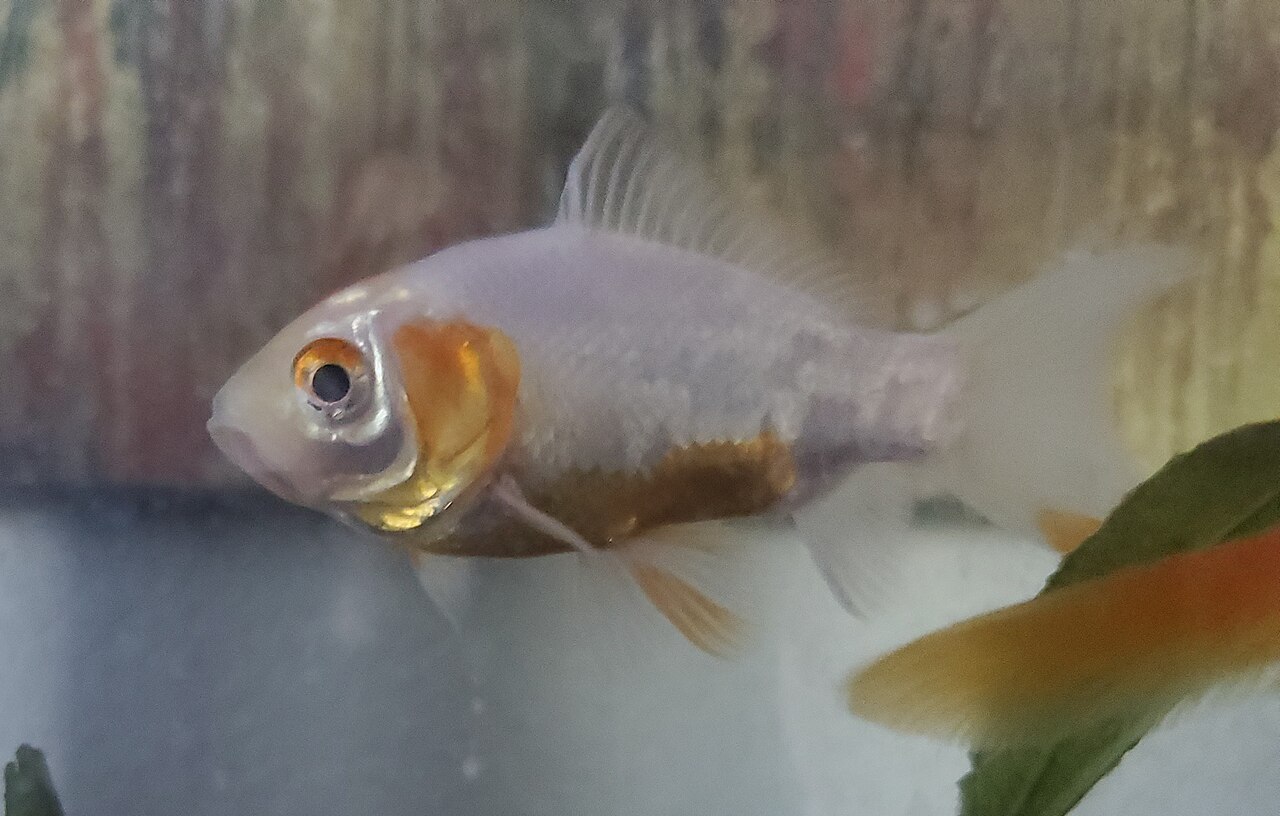
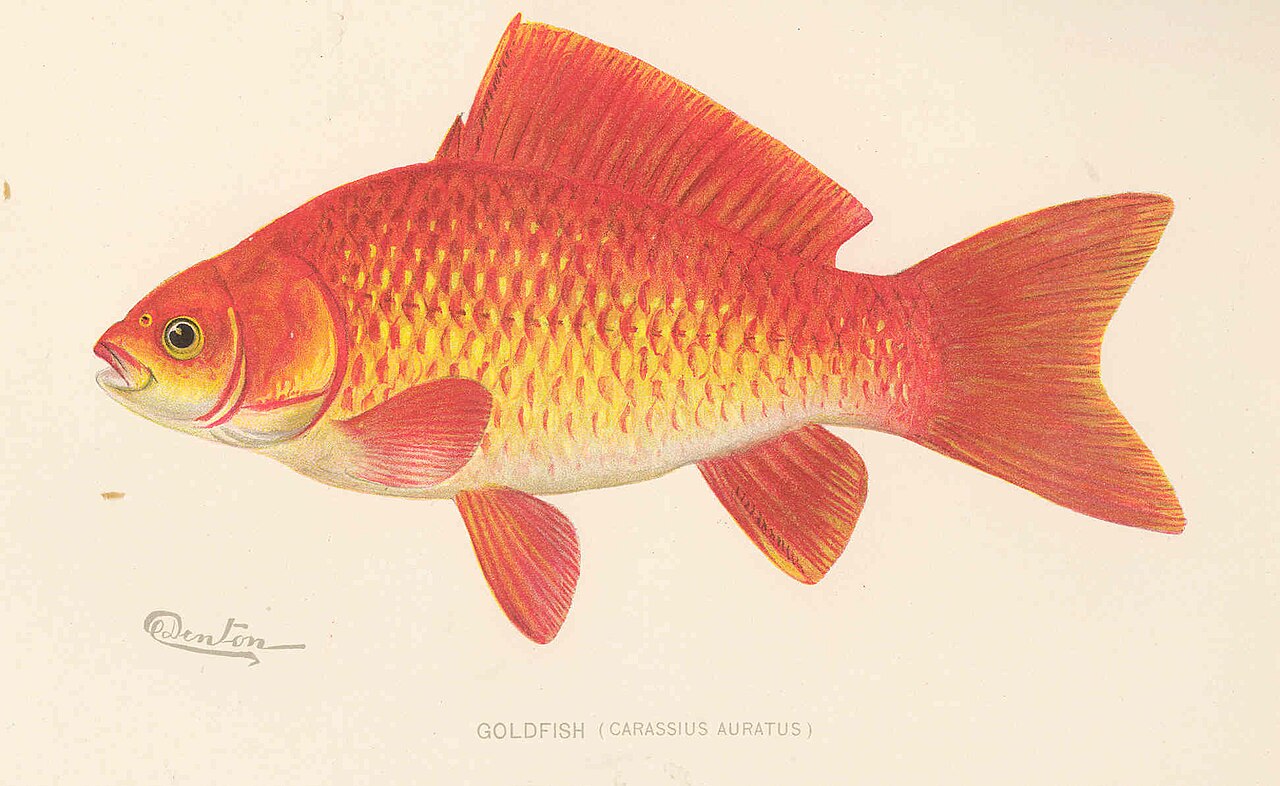
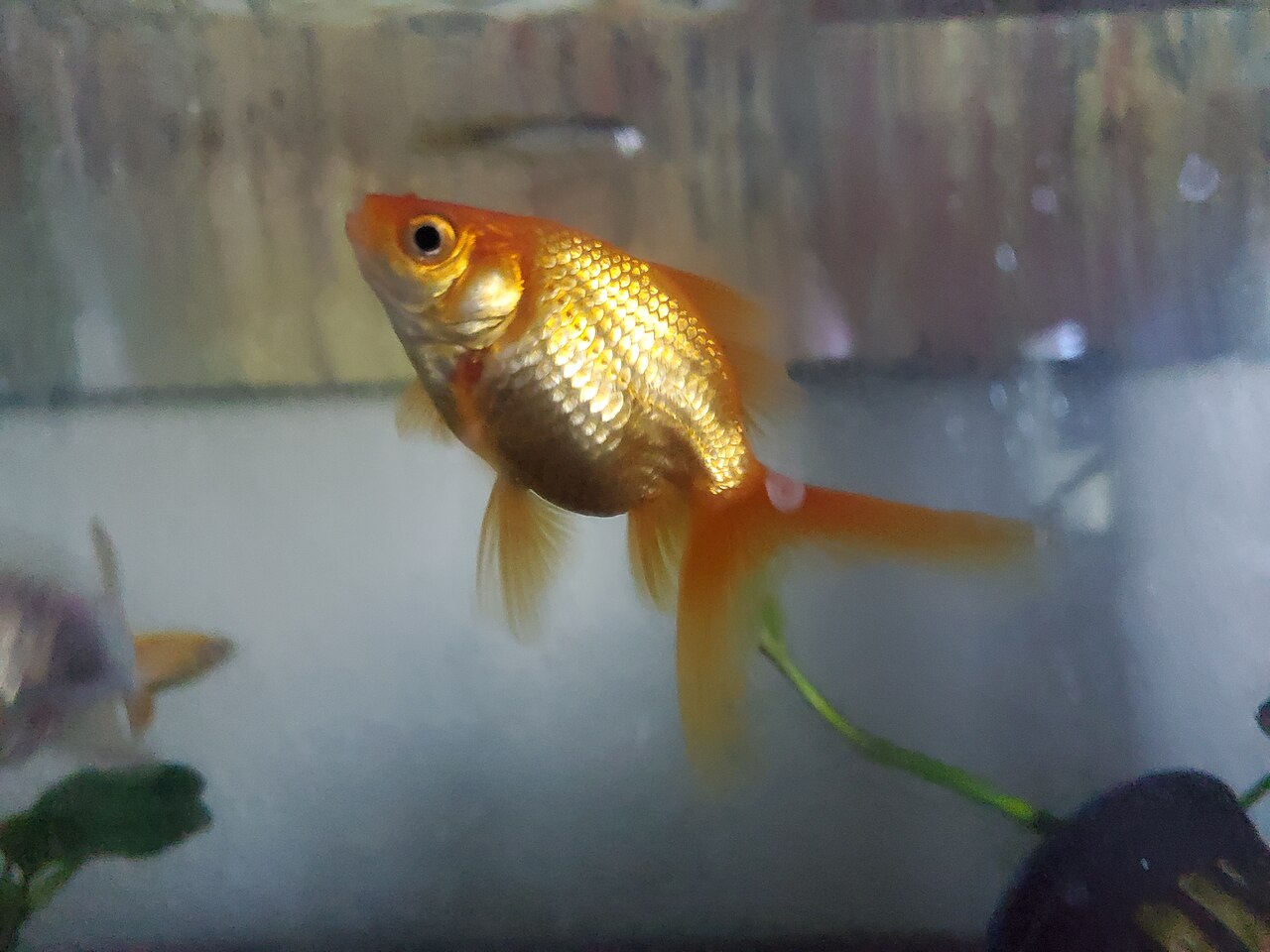
The goldfish (Carassius auratus) is a freshwater fish in the family Cyprinidae, native to China and commonly kept as a pet in indoor aquariums. It is one of the most popular aquarium fish and has become an invasive pest in parts of North America and Australia when released into the wild. A relatively small member of the genus Carassius, which also includes the Prussian carp and the crucian carp, the goldfish was first selectively bred for color in imperial China over a thousand years ago, leading to the development of several distinct breeds. These breeds vary greatly in size, body shape, fin configuration, and coloration, with combinations of white, yellow, orange, red, brown, and black known.
The history of goldfish domestication began in East Asia, where various carp species had been reared as food fish for millennia. Some normally gray or silver carp produced red, orange, or yellow color mutations, first recorded during the Jin dynasty (266–420). In the Tang dynasty (618–907), raising carp in ornamental ponds became popular, and a natural genetic mutation produced a yellowish-orange color instead of silver. People began selectively breeding this gold variety, keeping them in ponds and moving them to smaller containers for display on special occasions. By the Song dynasty (960–1279), selective domestic breeding was firmly established; in 1162, the empress ordered a pond built to collect red and gold varieties, and yellow goldfish were reserved for the imperial family. During the Ming dynasty (1368–1644), goldfish were raised indoors, allowing selection for mutations unsuited to ponds, and the first fancy-tailed goldfish appeared. Goldfish reached Japan in 1603 and Portugal in 1611, spreading to other parts of Europe. In the 1620s, they were highly regarded in southern Europe for their metallic scales, symbolizing good luck, and became a tradition for married men to give their wives a goldfish on their first anniversary. This tradition faded as goldfish became more common. They were introduced to North America around 1850, quickly gaining popularity; the largest breeder in the late 19th and early 20th centuries was Henry Bishop of Baltimore, known as the "Gold Fish King," whose farms sold over a million goldfish annually.
Taxonomically, the goldfish was once thought to be a subspecies of the crucian carp or Prussian carp, but modern genetic sequencing in
- Largest recorded size
- 20.4 inches (52 cm) as of 2019 in Australia
Lore & Background
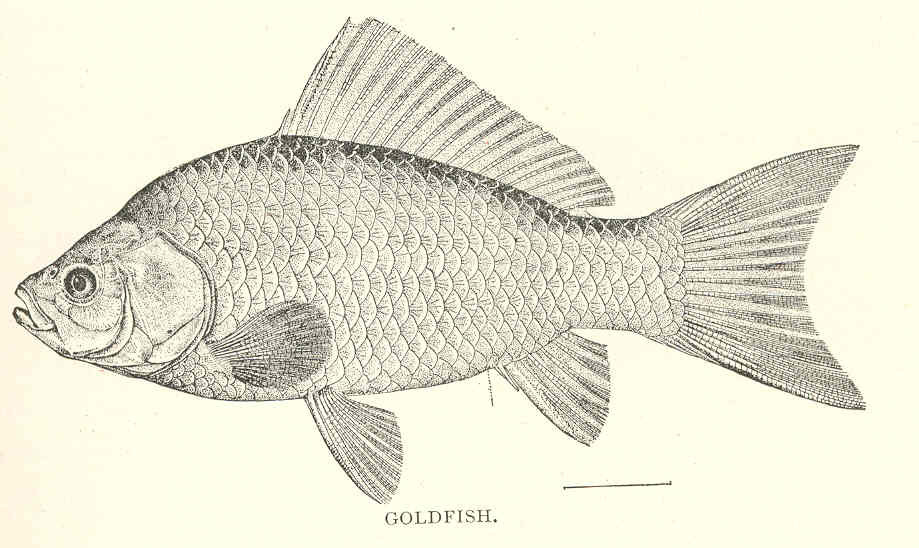
Goldfish are freshwater fish belonging to the family Cyprinidae. Their appearance varies dramatically due to over a millennium of selective breeding, resulting in numerous breeds that differ greatly in size, body shape, fin configuration, and coloration. Common colors include white, yellow, orange, red, brown, and black, often in combination. Wild goldfish typically grow between 4.7 and 8.7 inches, though they can reach up to 16 inches; the largest recorded individual was found in the Netherlands. Pet goldfish size is influenced by breed and tank size, though they do not simply grow to fit their container. Native to Southern China, goldfish are a relatively small member of the genus *Carassius*, distinguished from related species like the crucian carp by a more pointed snout and fewer than 31 scales along the lateral line. They lack the black tail spot seen in juvenile crucian carp. Goldfish can hybridize with some other *Carassius* species, as well as with koi and common carp, producing sterile hybrids. In the wild, they have become an invasive pest in parts of North America and Australia. Their vision is among the most studied of any domestic fish, making them a valuable model organism.
Reader's Guide
Goldfish have been a significant model organism for studying vision and hearing in fish, possessing four kinds of cone cells (red, green, blue, ultraviolet) making them tetrachromats, and two otoliths with Weberian ossicles for sound detection. They are gregarious, display schooling behavior, and have strong associative and social learning abilities. Their ability to survive short periods of anoxic conditions is thought to be an adaptation to frozen water bodies over winter. The largest breeder in the late 19th and early 20th century was Henry Bishop of Baltimore, known as the 'Gold Fish King,' whose farms sold more than one million goldfish a year.
Did You Know?
- Goldfish have four kinds of cone cells, sensitive to red, green, blue, and ultraviolet light, making them tetrachromats.
- The largest goldfish on record measured 20.4 inches (52 cm) in Australia in 2019.
- Goldfish can hybridize with koi and common carp, and some of these hybrids can be fertile.
Gallery
Frequently Asked Questions
What is the goldfish and where does it come from?
The goldfish (Carassius auratus) is a freshwater member of the carp family, Cyprinidae, that originated in China. It is most commonly encountered today as a pet living in indoor home aquariums.
How big can a goldfish actually get?
The largest goldfish on record measured roughly 20.4 inches (52 cm) and was documented in Australia in 2019. Most aquarium-kept individuals stay well below that size.
Why is the goldfish so popular as a pet?
Humans have selectively bred this carp for over a thousand years to produce a wide palette of vivid coloration, making it visually striking in a tank. Its hardiness and relatively simple care needs have kept it among the most widely kept aquarium species.
What problem do goldfish cause in the wild?
When escaped or deliberately dumped pets establish feral populations in parts of North America and Australia, they outcompete native fish for food and habitat. This has earned the species a reputation as an invasive pest in those regions.
How long has the goldfish been a domesticated animal?
It is essentially a domesticated carp line that has been selectively bred for ornamental color for approximately a millennium. That extended history of human selection is what gives modern varieties their distinctive shapes and hues.
More in Fish 1-24
Spotted an error? Know more?
This is a living reference — every entry is fact-audited, and reader corrections feed straight into our audit queue. Suggest an edit · See this site's audit record