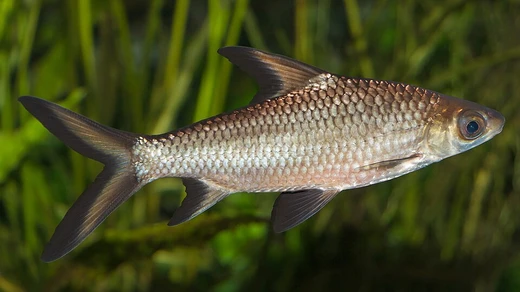
Gill
Respiratory organ for aquatic gas exchange.
A gill is a specialized respiratory organ used by many aquatic animals for gas exchange, extracting dissolved oxygen from water and excreting carbon dioxide. The zoologists' academic name for gills is branchia (plural: branchiae), from Ancient Greek βράγχια. Gills are found in diverse groups including molluscs, crustaceans, xiphosurans, aquatic insects, polychaetes, and most aquatic vertebrates such as fish and amphibian tadpoles. The microscopic structure of a gill provides a large surface area in contact with the external environment, which facilitates optimal diffusion. With the exception of some aquatic insects, gills possess filaments and lamellae (folds) containing blood vessels or coelomic fluid; gases are exchanged through the thin gill walls and then distributed by the circulatory system. The delicate nature of gills is supported by the surrounding water, which prevents them from collapsing. Water is typically moved across the gills in one direction by currents, animal motion, ciliary beating, or a pumping mechanism. In fish and some molluscs, efficiency is greatly enhanced by a countercurrent exchange system, where water flows opposite to the blood, allowing up to 90% of dissolved oxygen to be recovered. Historically, Galen observed that fish had numerous openings (foramina) large enough for gases but too fine for water to pass. Pliny the Elder noted that fish respired through their gills, contrary to Aristotle's opinion. The gills of some semi-aquatic clades, such as crabs, terrestrial hermit crabs, and amphibious fishes, have adapted for air respiration on land if kept moist. In certain terrestrial chelicerates like spiders and scorpions, ancestral gills evolved into air-breathing book lungs. In some planktivorous bony fish, such as silver and bighead carps, gills also serve as filter-feeding organs via comb-like gill rakers. Semi-terrestrial marine animals like crabs and mudskippers possess gill chambers that store water, allowing temporary survival on land using the reservoir of dissolved oxygen.
- type
- Respiratory organ
- primary function
- Aquatic gas exchange (oxygen uptake, carbon dioxide excretion)
- academic name
- Branchia (plural: branchiae)
- found in
- Molluscs, crustaceans, xiphosurans, aquatic insects, polychaetes, fish, amphibian tadpoles
- key feature
- Large surface area with filaments and lamellae for diffusion
- notable adaptation
- Countercurrent exchange mechanism in fish and some molluscs
Lore & Background
A gill is a specialized respiratory organ used by many aquatic animals to extract dissolved oxygen from water and excrete carbon dioxide. The zoological term for gills is branchia, from the Ancient Greek word for gills. Galen observed that fish had numerous openings large enough to admit gases but too fine to allow water to pass. Pliny the Elder believed fish respired through their gills, though he noted Aristotle held a different view. Gills typically consist of thin filaments, lamellae (plates), branches, or tufted processes with highly folded surfaces to maximize surface area for gas exchange. This large surface area is critical because water contains far less dissolved oxygen than air—less than one twenty-fifth the oxygen content—and oxygen diffuses much more slowly in water. The surrounding water supports the delicate gill tissue, preventing collapse. Blood or coelomic fluid flows through vessels within the gill filaments, and gases diffuse across the thin gill walls. Many species use a countercurrent exchange mechanism, where water flows over the gills in the opposite direction to blood flow, recovering up to 90% of dissolved oxygen. In vertebrates, gills develop in the pharynx walls along a series of gill slits. Fish typically have five pairs of gill slits, though some primitive sharks have six. Cartilaginous fish like sharks and rays have gill slits that open directly to the outside, separated by cartilaginous gill arches. Some semi-aquatic animals, such as crabs and mudskippers, store water in gill chambers to survive temporarily on land. In certain terrestrial chelicerates, ancestral gills evolved into air-breathing book lungs. Some planktivorous bony fish use comb-like gill rakers for filter feeding.
Reader's Guide
The high surface area of gills, achieved through filaments and lamellae, allows efficient diffusion. In fish and some molluscs, a countercurrent exchange mechanism enhances efficiency, recovering up to 90% of dissolved oxygen. Gills also serve other functions: in some planktivorous bony fish, gill rakers act as filter-feeding organs; in marine teleosts, gills excrete osmolytes to regulate internal fluids. Semi-terrestrial animals like crabs and mudskippers have gill chambers that store water for temporary land survival. The gills of some semi-aquatic clades have adapted for air respiration when kept moist, and in terrestrial chelicerates, ancestral gills evolved into book lungs.
Did You Know?
- Gills of some semi-aquatic clades (e.g., crabs, terrestrial hermit crabs, amphibious fishes) can allow air respiration on land if kept moist.
- In some planktivorous bony fish (e.g., silver and bighead carps), gills are used as filter-feeding organs via comb-like gill rakers.
- The gills of vertebrates typically develop in the walls of the pharynx along a series of gill slits opening to the exterior.
- Marine teleosts use their gills to excrete osmolytes such as Na⁺ and Cl⁻.
The Countercurrent Exchange Engine
Fish gills operate through one of nature's most elegant pumping systems. A fish rhythmically draws oxygen-rich water into its mouth, then contracts the sides of its throat to force that water across the gill surfaces and out through openings along the pharynx. What makes this process extraordinarily efficient is the arrangement of blood flow within the gill filaments: capillary blood travels in the exact opposite direction to the passing water. This countercurrent design ensures that at every point along the lamellae, the blood encounters water that still carries a higher oxygen concentration than itself, permitting diffusion to proceed continuously from one end of the filament to the other. The result is a system capable of extracting more than eighty percent of the dissolved oxygen available in the surrounding water. Without this mechanism, and without the one-way current maintained by the specialized pumping action, the modest oxygen content of water would be insufficient to sustain an active aquatic life.
Architecture and Diversity Across Species
The physical construction of gills varies remarkably across the vertebrate tree. In bony fish, the gills sit within a branchial chamber shielded by a bony operculum, a protective cover that also helps regulate internal water pressure so the fish need not rely on constant forward motion to ventilate. Most bony fish species carry five pairs of gill arches, though a handful have lost some through evolutionary streamlining. Cartilaginous fish such as sharks and lampreys possess five to seven pairs, while the most primitive jawless fish retain seven. The vertebrate ancestor likely had far more, since some chordate relatives display over fifty pairs of gill structures. Each arch supports comb-like filaments whose highly folded surfaces maximize the area available for gas exchange. In bony fish, these arches typically lack a central septum, allowing the gill tissue to project freely, supported by individual gill rays. Some species also retain gill rakers, and a vestigial pseudobranch at the base of the operculum persists in nearly all but the most primitive bony fish.
Evolutionary Roots and Embryonic Legacy
The origins of gills have been a subject of shifting scientific understanding. For years, researchers believed two separate developmental pathways gave rise to gills: one from the endoderm in jawless fish and another from the ectoderm in jawed species. However, recent work examining gill formation in the little skate has provided evidence that all extant fish gills trace back to a single common ancestral structure. This unifying view is reinforced by the fact that juvenile bichirs display external gills, a primitive trait they share with larval amphibians, hinting at deep homology across vertebrate lineages. Beyond fish, the gill arches leave an indelible mark on higher vertebrates. During fetal development, these same arches lay the groundwork for jaws, the thyroid gland, the larynx, and the middle-ear bones—the columella in reptiles and amphibians, and the malleus and incus in mammals. Gill slits may even be the evolutionary precursors of human tonsils, the thymus gland, and the Eustachian tubes, all derived from embryonic branchial pouches.
The Osmotic Challenge and Beyond Gas Exchange
Extracting oxygen from water presents a far steeper physical challenge than breathing air. A litre of freshwater holds only about eight cubic centimetres of dissolved oxygen, compared with roughly 210 in the same volume of air. Water is roughly 777 times denser and 100 times more viscous than air, and oxygen diffuses through it about ten thousand times more slowly. These properties mean that sac-like lungs simply could not pull enough oxygen from water to sustain life. Instead, gills exploit the density of water to keep their delicate filaments from collapsing and clumping together—a problem that strikes immediately when a fish is lifted into air. Beyond respiration, gills handle the exchange of ions, water, acids, and ammonia. Marine teleosts face a particular osmotic burden: seawater's higher salt concentration draws water out through the gills by osmosis. To compensate, these fish drink large volumes of seawater and expend metabolic energy to pump excess sodium and chloride ions out through specialized ionocytes, formerly called mitochondrion-rich or chloride cells.
Gallery




Frequently Asked Questions
What is a gill?
A gill is a specialized breathing structure that aquatic organisms use to pull dissolved oxygen out of water while releasing carbon dioxide. It functions as the underwater equivalent of a lung.
What is the scientific term for gills?
In zoological literature, gills are referred to as branchia (or branchiae in the plural), a term derived from the Ancient Greek word βράγχια.
Which animals have gills?
Gills appear across a wide range of aquatic species, including molluscs, crustaceans, xiphosurans, aquatic insects, polychaete worms, fish, and the larval stage of amphibians like tadpoles.
What makes gills efficient at gas exchange?
Gills have a massive surface area created by tiny filaments and lamellae, which maximizes the area available for diffusion. Many fish and some molluscs also use a countercurrent exchange mechanism to keep oxygen transfer going in one direction.
How does a gill actually extract oxygen from water?
Water flows over the gill surface where dissolved oxygen diffuses across thin membranes into the blood, while carbon dioxide moves in the opposite direction to be expelled. The large surface area of filaments and lamellae makes this passive diffusion process highly effective.
More in Fish 1-24
Spotted an error? Know more?
This is a living reference — every entry is fact-audited, and reader corrections feed straight into our audit queue. Suggest an edit · See this site's audit record